Spinal Canal Stenosis

A narrowing of the central spinal canal that directly squeezes the spinal cord in the neck or in the lower back — causing pain, weakness, and neurological symptoms that affect both sides of the body. The most serious form of spinal stenosis.
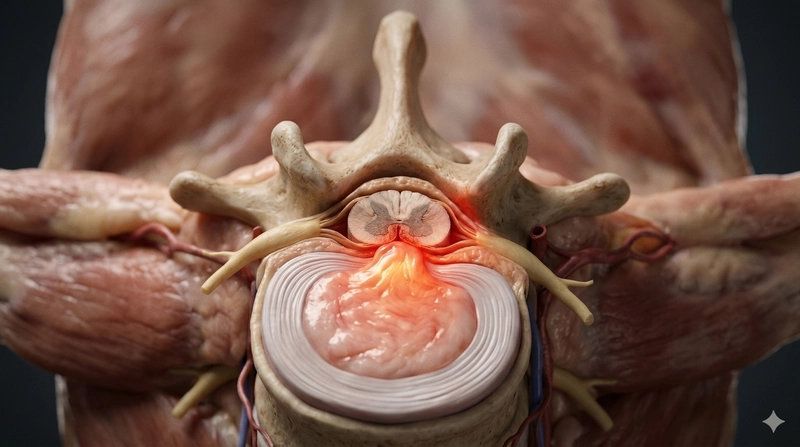
Spinal Canal Stenosis

Symptoms

Spinal canal stenosis specifically refers to narrowing of the central canal — the tube that houses the spinal cord and cauda equina. Unlike foraminal stenosis (which compresses individual nerve roots), central canal stenosis compresses multiple neural structures simultaneously, often producing symptoms on both sides of the body.
Hallmark symptoms: Neurogenic claudication (lumbar) — bilateral leg heaviness, pain, or weakness that develops after walking a short distance and is immediately relieved by sitting or bending forward. Shopping trolley sign: patients lean forward on a trolley to open the canal and walk further. This is the defining clinical feature of lumbar canal stenosis. Myelopathy (cervical) — progressive loss of hand dexterity, clumsy gait, weakness in both arms or legs, and difficulty with fine motor tasks. Unlike radiculopathy (arm pain from one nerve), myelopathy affects cord function and can progress to paralysis if not treated. Other symptoms you may experience:

Mild to severe pain from the lower back through the buttocks, thigh, calf, and foot — both sides

Pain from the neck or upper back into the hands and fingers — one or both sides

Tingling, numbness, burning, or weakness in the legs, feet, hands, or fingers

Imbalance and gait disturbance — shuffling, unsteady walking, falls

Back or neck pain that comes and goes — varying with position and walking distance

Morning stiffness that may increase or ease with movement

Dizziness or vertigo with position change — cervical cord involvement

Reduced/trouble urinating or passing motion (bladder or bowel control) — a red flag requiring emergency assessment

Sudden or rapidly progressive loss of bladder or bowel control, bilateral leg weakness, or inability to walk are medical emergencies in spinal canal stenosis. Seek immediate care — delayed treatment risks permanent spinal cord or cauda equina damage.

Book Your Consultation

95% successful rate.

Ready To Live Pain-Free?

Take the first step towards healthier life today. No Surgery. Just Science.