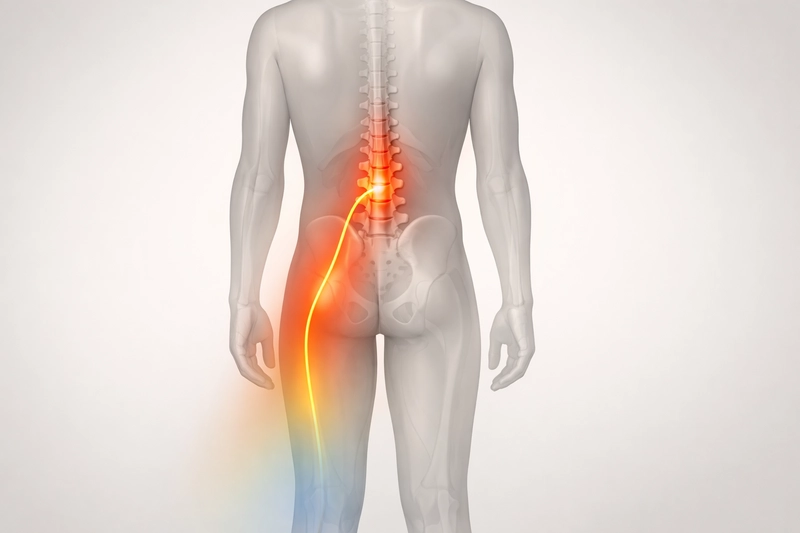
Lumbar Radiculopathy
A condition caused by compression of a nerve root in the lower back — producing pain, tingling, numbness, burning, or weakness that radiates from the lower back through the buttocks, thigh, calf, and into the foot and toes.
Symptoms
Mild to severe pain radiating from the lower back through the buttocks and down the leg — one or both sides
Increasing pain with lifting and bending, worsening progressively with activity
Pain worsening with prolonged rest, sitting, standing, or walking
Morning stiffness and back pain that may increase or ease with movement
Tingling, numbness, burning, or weakness in the legs and feet
Back and leg pain that comes and goes — varying with posture and position
Imbalance or muscle weakness in the affected leg — difficulty climbing stairs
Reduced bladder or bowel control in severe cases — seek immediate care
Lumbar radiculopathy affecting both legs, or combined with loss of bladder or bowel control, is a medical emergency (cauda equina syndrome). Seek immediate care — delayed treatment can cause permanent paralysis.
