Disc Herniation
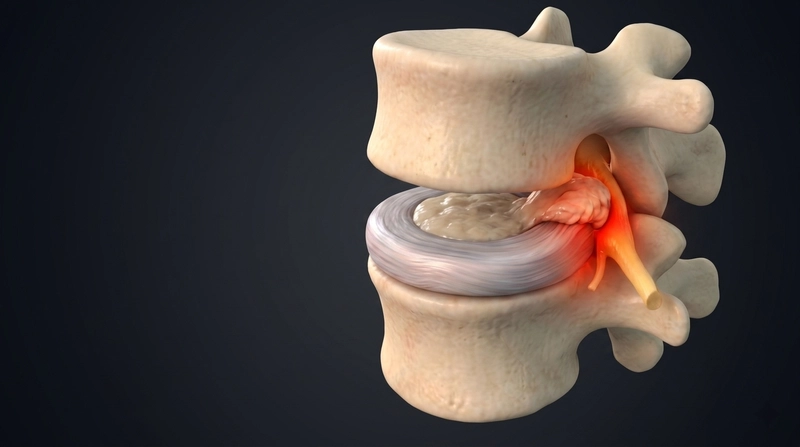
Disc herniation is a condition in which the inner soft gel of the disc (nucleus pulposus) slips out from the outer hard layer (annulus fibrosus) and presses on a nerve.
L4–L5 most common lumbar level affected, C5–C6 most common cervical level affected, 90% of cases resolve without surgery when treated correctly
Symptoms
Disc herniation is most common in the lumbar spine (lower back) and second most common in the cervical spine (neck). It represents a more advanced stage than a disc bulge — the inner gel has actually broken through the outer wall, making direct nerve contact more likely and symptoms typically more severe.
Hallmark symptoms of disc herniation:
Sharp, shooting, electric-shock pain radiating down the leg or arm — often described as worse than the back pain itself. This nerve pain is the defining feature that distinguishes disc herniation from simpler back pain.
Foot drop — difficulty lifting the foot when walking, standing, or sitting, caused by compression of the L4–L5 nerve root. This is a red flag requiring urgent assessment.
Other symptoms you may experience:
Increasing pain with lifting and bending, worsening with activity
Morning stiffness that may increase or ease with movement
Pain radiating from the buttocks down one or both legs
Pain worsening with rest, sitting, standing, or walking
Tingling, numbness, burning, or weakness in the legs and feet
Back or neck pain that comes and goes with posture changes
Reduced bladder or bowel control in severe cases
Foot drop or sudden loss of bladder / bowel control are medical emergencies. Seek immediate attention — delayed treatment can lead to permanent nerve damage.
