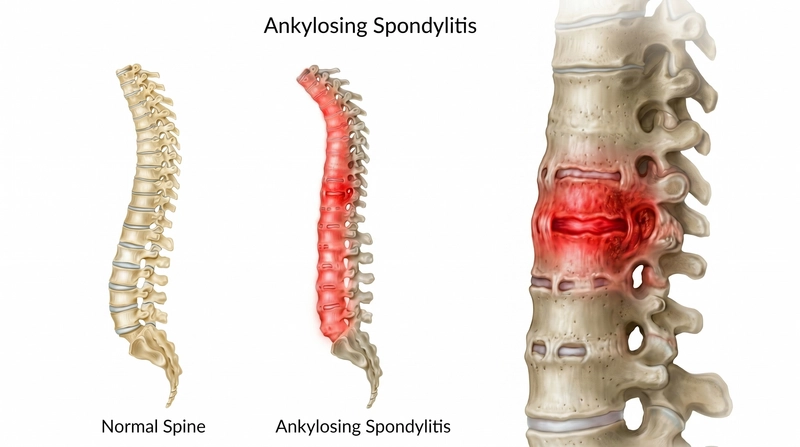
Ankylosing Spondylitis
A chronic, progressive inflammatory disease of the spine that causes pain, stiffness, and reduced mobility — and can lead to permanent fusion of the vertebrae if left unmanaged. Early diagnosis and timely intervention are critical.
Symptoms
Early morning stiffness and pain in the lower back, neck, and hips — worst on waking, easing with movement
Increasing pain and difficulty with movement — bending, turning, or straightening the spine
Pain radiating from the buttocks into one or both legs — sacroiliac joint involvement
Pain spreading from the neck or upper back into the hands or fingers when discs are involved
Tingling, numbness, burning, or weakness in legs, feet, hands or fingers (disc involvement)
Pain worsening with prolonged rest or sitting — characteristically relieved by activity
Loss of bladder or bowel control in severe cases with cord involvement
Progressive loss of spinal flexibility — difficulty looking over the shoulder or bending forward
